
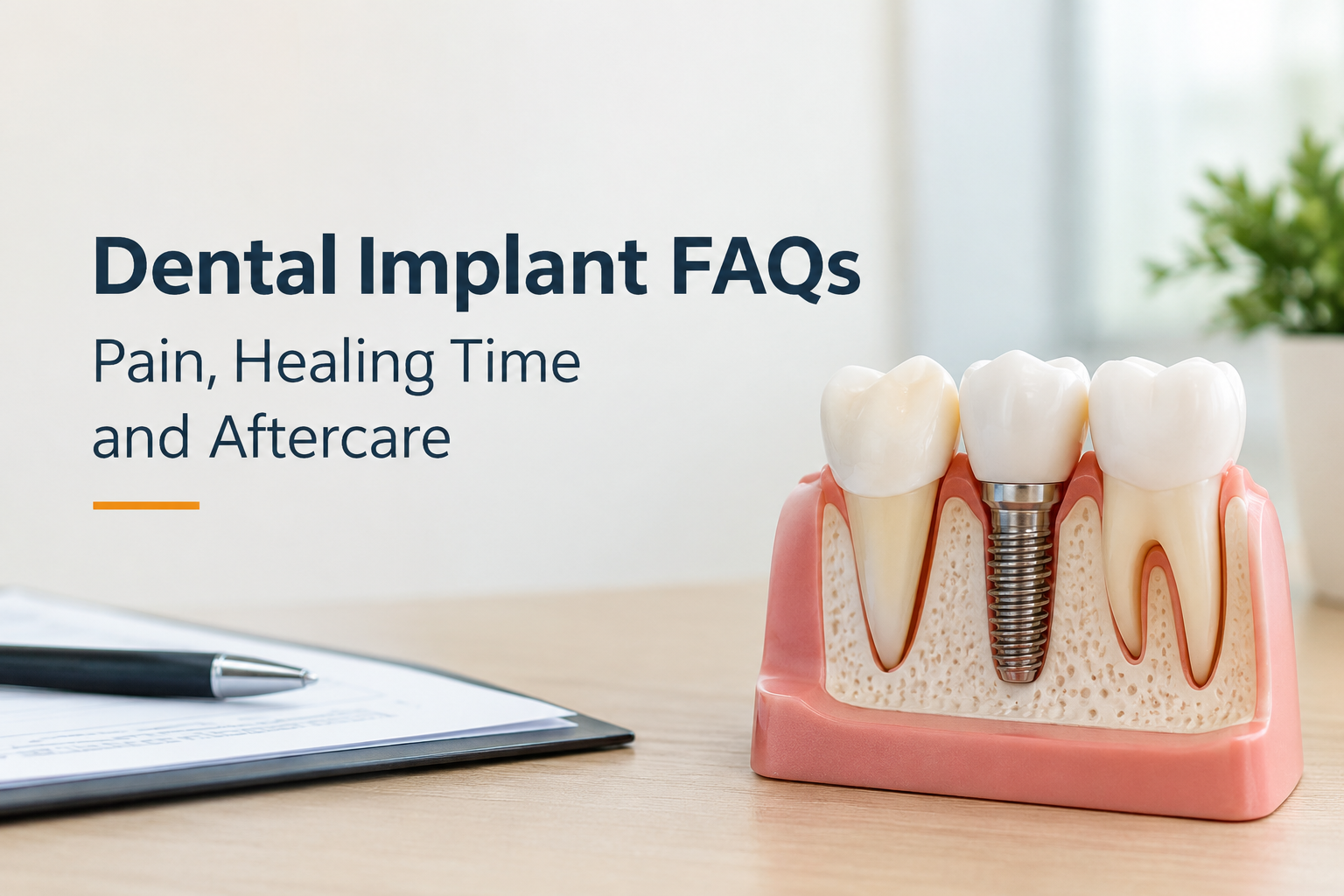
Dental implant is a process of replacing missing teeth. There are many concerns that you may have regarding pain, healing and implant aftercare prior to undergoing this procedure. There will be some degree of soreness and swelling after the surgery itself which will generally subside within a few days. The healing time will vary from person to person depending on your individual health, the quality of your bone and the complexity of the treatment. At Winston Hills Dental, we want to make sure you have all the information you need so you know exactly what to expect before and after your dental implant treatment.
Here is a list of some common dental implant FAQs:
Can Dental Implants Hurt During or After Treatment?
Dental implant surgery is conducted under local anesthetic. So you won’t feel any pain during the procedure. You may feel some pressure and movement as the dentist is working. If you do feel any discomfort at all, then you should let your dental professional know immediately.
Once the anesthetic has worn off, you may have some degree of soreness, swelling, bruising or tenderness around the implant site. This resolves in a few days, as recovery time will vary from person to person. Your dentist will prescribe you the proper pain relief medication for your pain.
How Long Does Dental Implant Healing Take?
The duration of your recovery from implants depends on how soon your gums have recovered and how much they have fused with your bone. The gums will usually be sensitive for one to two weeks before they recover, while the bone may take up to three months to fuse with the implant. Sometimes there may be a need for additional time before a new crown, bridge or denture is put in place.
The whole treatment process can take several months. Your implant healing time will be dictated by a number of factors, including your bone density, your gum health, how many implants you require, and whether or not you need any additional procedures.
At your consultation, we’ll assess your oral health and go through the various steps involved in your treatment so that you’ll know what appointments you’ll need and what your recovery time will be.
What Does Proper Implant Aftercare Involve?
It’s important to take implant aftercare in the early stages to protect the area as it heals. You’ll of course need to follow your dentist’s instructions, as their cleaning advice may be different in the first few weeks.
Remember the following practical tips:
- Practice oral hygiene as recommended. Your dentist may recommend that you brush gently away from the operation area.
- Select food choices wisely; that is, select soft foods until you are able to chew and your dentist has advised you otherwise.
- Avoid smoking, as it can interfere with the process of healing and increases the chances of complications.
- Take medication appropriately; that is, take medication as recommended by your dentist.
- Visit your dentist at scheduled follow-up appointments, as this provides your dentist with a chance to evaluate how you are healing.
Do not rinse your mouth too vigorously and don’t disturb the wound at all as you’re healing. If the bleeding doesn’t cease or you develop a fever, pus or more swelling then get in touch with your dentist straight away.
How Can I Keep My Dental Implants Healthy Long-Term?
Dental implants need to be cleaned just as you would clean your natural teeth and need to be checked by your dentist. The implant itself can’t get cavities but the gums around it can become inflamed or infected. If you don’t keep your mouth clean, you can develop peri-implant disease which can damage the tissues and bone around the implant.
For long-term care, we recommend that patients:
- Brush twice a day with a soft bristled toothbrush.
- Clean between the teeth and around the implant using suitable floss or interdental brushes.
- Attend routine dental check-ups and have professional cleans.
- Don’t smoke and talk to your dentist about the teeth grinding.
With proper care dental implants can last for many years. The crown on top will eventually wear out and will need replacing. Regular reviews with your dentist will allow them to keep an eye on your implant, your gums and the crown.
When Should I Contact My Dentist After Implant Surgery?
It’s normal to have some tenderness post op but your symptoms should gradually improve. If you have increased pain, bleeding that won’t stop, increased swelling, pus, fever or if your implant feels loose, then call your dentist. If you have any difficulty at all with breathing or swallowing, then you need to get medical help immediately.
At Winston Hills Dental, we want you to feel free to ask any questions if anything at all seems odd as you’re recovering. Checking early will help us to spot any issues and determine whether you in fact need any treatment.
Are Dental Implants Toongabbie Right for Me?
If you’re thinking about dental implants in Toongabbiefwins, then it can be helpful to have an assessment to determine whether implants are appropriate for your individual oral health. Your dentist will examine your gums, your jawbone and your remaining teeth, will look at your medical history and will discuss with you the various treatment options available.
If you are interested in dental implants in Toongabbie, our team at Winston Hills Dental can walk you through the procedure, what to expect during healing, and how to manage your implants’ aftercare. You can also find out more about our dental implant services for Toongabbie patients before booking a consultation.
Take the next step to restore your missing teeth and understand the healing process prior to treatment. Consult our staff regarding how to take care of your implants and maintain good oral health.


